There’s no doubt that your mobile phone contact list and calendar are important. Heck, you use them everyday. But what if you could get more value from your contact list, your calendar, and even your phone? Using a contact manager will help you do just that. Contact management is more than just a list of names, numbers, email addresses, and a calendar. Mobile phone contact management is all about turning the contacts in your list into mutually beneficial relationships. Let’s look at how you can derive more value by managing contact details, organizing contacts into meaningful categories, and having an integrated calendar that creates comprehensive contact logs.
Managing Contact Details
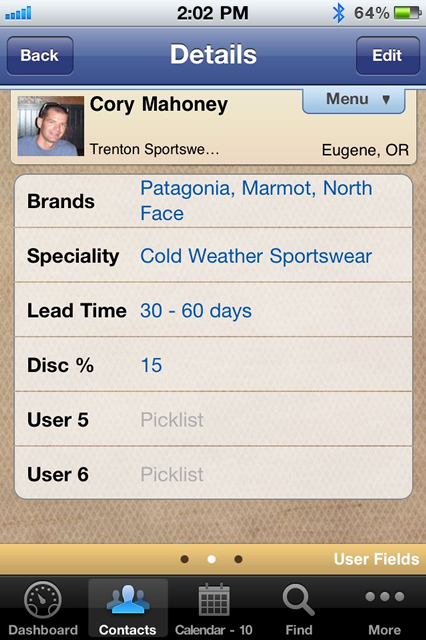
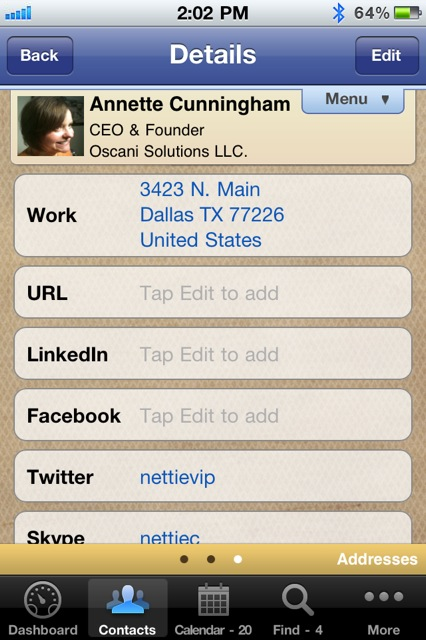
Contact details are the most important part of contact management. Apart from the standard address and contact information, there are many details about a contact that, when leveraged, can set you apart from your competitors. Let’s say you’re a sales professional trying to close that big deal and your customer needs a quote by the end of the week. If you’re using a contact manager, you’re able to record the details of the request, schedule a to-do to send the quote, and when you send it, it’s automatically logged so you have a history of your relationship.
Recording, tracking, and leveraging details about your relationships can mean the difference between closing the sale and losing out to a competitor. A savvy sales professional will make use of relationship details to deliver what’s important to customers and build sustainable relationships. Remember, people deal with people they like.
Contact Log
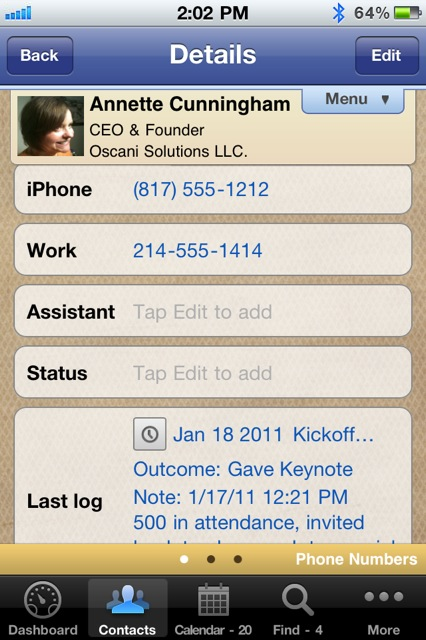
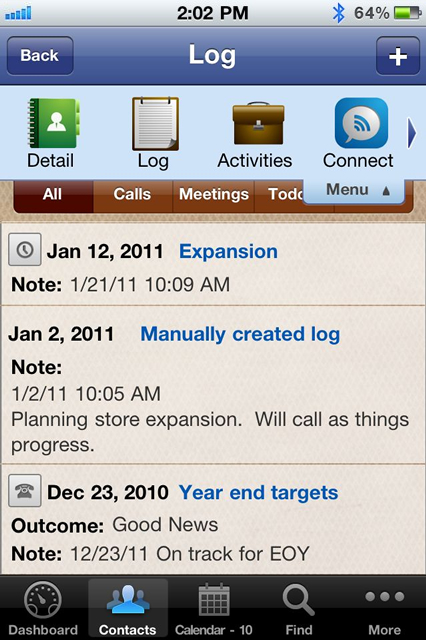
The ability to instantly recall details about conversations and activities with your customers is a powerful thing. Not only does it showcase your professionalism, it shows you care. And that’s what relationships are all about. When was the last time you talked to an important client? And what was the outcome of the call, meeting or email exchange? Retaining these details ensures consistent and effective communication. With a contact manager that automatically records your customer interactions, you have all the details of your relationship at your fingertips.
Orbits—Your Spheres of Influence
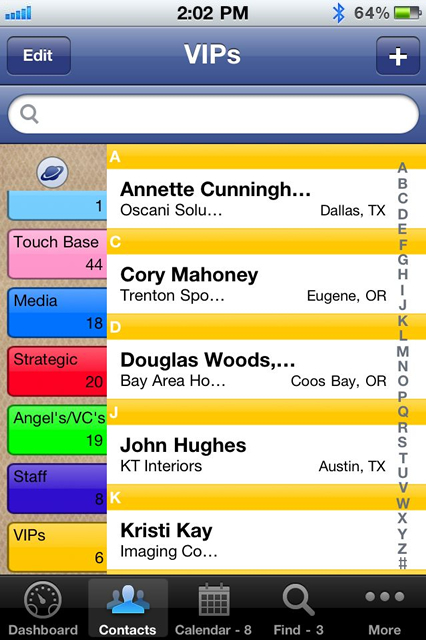
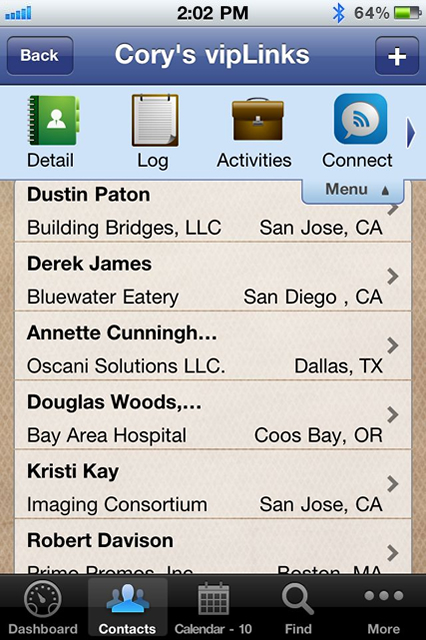
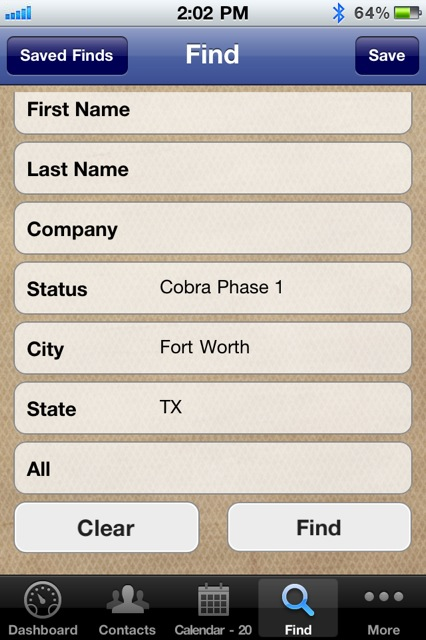
Grouping contacts by orbits, or spheres of influence, allows quick and easy access to those contacts and enables you to leverage relationships and build business strategies based on the needs of specific groups of contacts. Orbits make it effortless to schedule group events and send group notifications. You could create an orbit of your family members for quick contact. Or group your favorite restaurants, making your turn to suggest a lunch spot quick and easy.
Calendar Integration
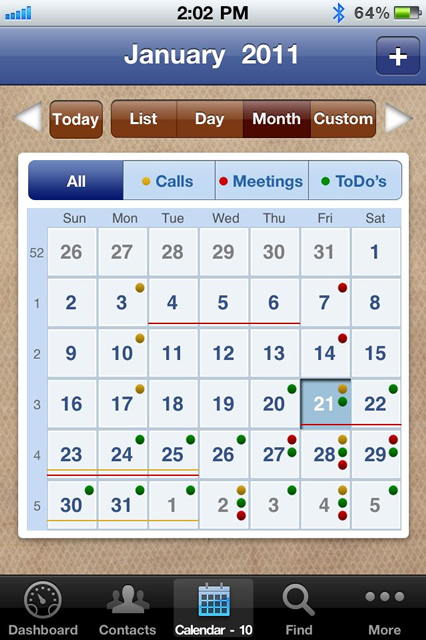
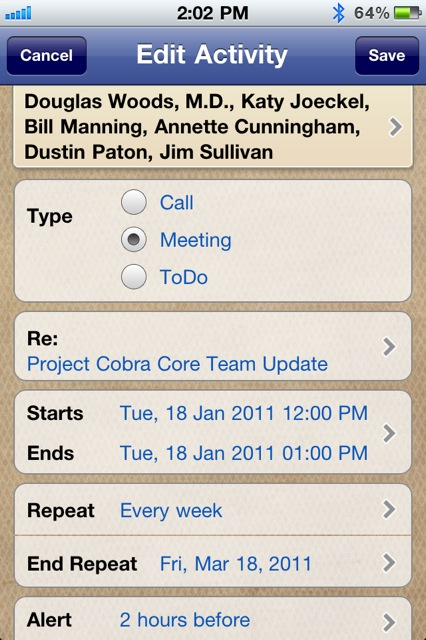
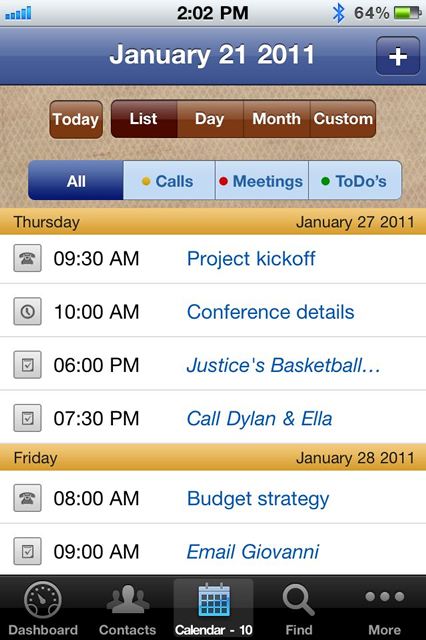
Contact management also includes the ability to schedule appointments—calls, meetings and to-do’s—with your contacts. As you schedule an activity, you select participants, and the activity is recorded on the contacts' records. Even when weeks or months go by between interactions, you'll know how you last interacted and have easy access any notes you recorded from that last conversation.
You might have started by asking yourself, "Do I need a contact manager?" We suggest asking a better question: “How successful do I want be?” The answer to the second question may be determined by the way you answer the first.