• Add comment

    As an avid fan of TEDTalks, I recently watched a talk by cyborg anthropologist Amber Case titled, “We are all cyborgs now.” Case discusses how technology has transformed the human species, and she states that the purpose of technology is to extend our human capabilities. After watching this talk, I thought about how this applies to relationship management.

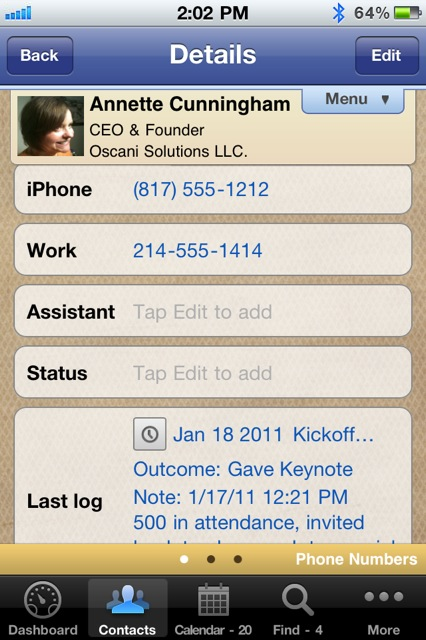
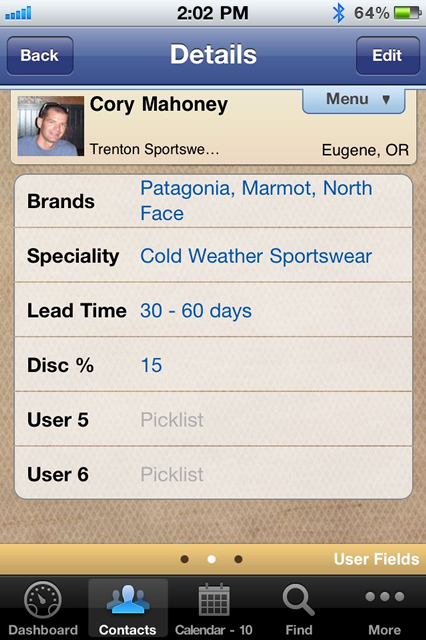
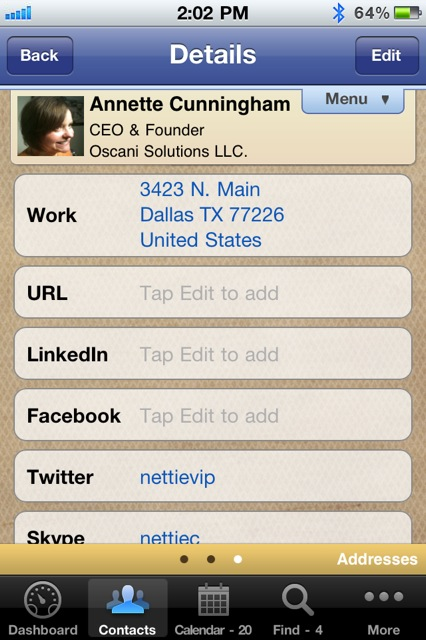
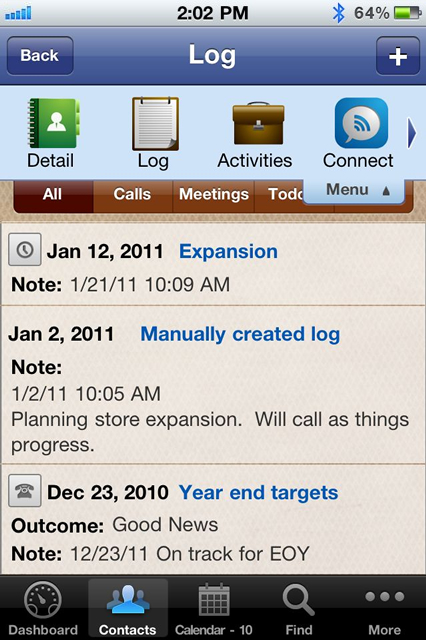
    A relationship manager is the tool that extends your capabilities of maintaining healthy personal and business relationships. It’s a tool that keeps all the details in an always-accessible location. Now that the smartphone is a real thing, you can have your “external brain” with you at all times. We have a whole extra hard drive of space for information that we didn’t have before. We can stop trying to force ourselves to keep every detail about our relationships in our brains and put it on a device that has no choice but to keep track of that information. All we have to do with our brains is remember to tell our “external brains” which information to remember, and it’s stored for us!

    This is what technology and the Internet are supposed to do. We can now connect easier and faster than ever before. However, it’s imperative that we use the proper tools to help us maintain good relationships. While technology is here to help us, it is growing and changing at an exponential rate. If we aren’t careful, we might fall victim to forgetting things because of the flood of information we all wade through every single day.

    I now use a relationship manager to help keep track of all the connections I make online through social media networks. If you’re like me, your Facebook friends list, the list of your followers on Twitter, and your connections on LinkedIn are always growing. It’s impossible to remember everything about all of these people, but having a relationship manager in my pocket can keep all of that information in my “external brain.”

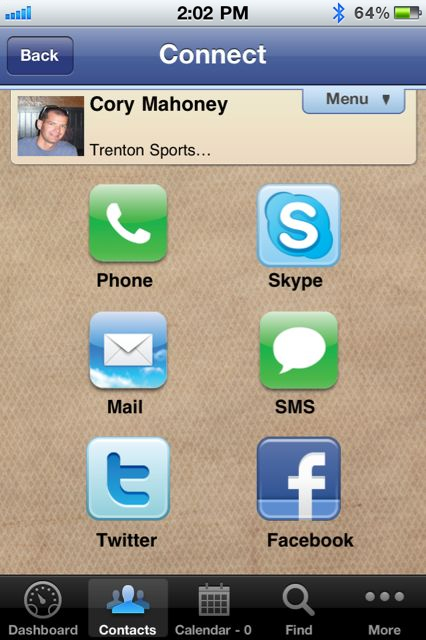
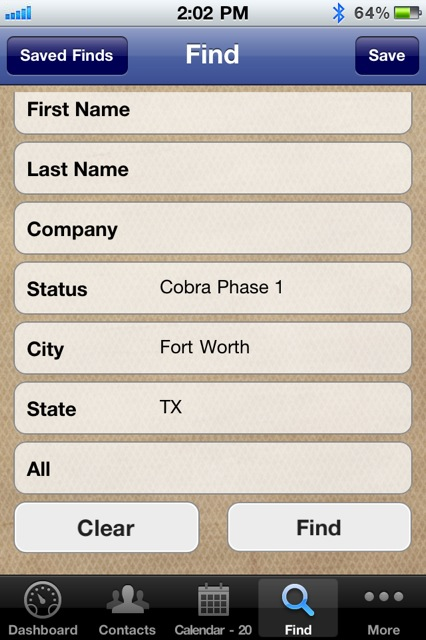
    Not everyone uses a relationship manager. Many people are simply "making do" with the tools they already have, like the native Contacts and Calendar apps on their iPhones. However, these separate information silos require more effort to accomplish even the simplest of tasks. In fact, I'd have to open several apps just to find what I need. It’s like picking up ingredients for a meal at several different grocery stores. Wouldn’t it be faster to make one transaction instead of several? With a relationship manager, I have to make one information transaction instead of a few entries in separate apps.

    I've found that using a relationship manager makes all the difference in both my personal life and career. I'm better equipped to establish personal connections. I'm able to remember more details than someone who doesn’t take advantage of a relationship manager, which sets me apart from my competition.

    Just because we’re cyborgs doesn’t mean shouldn't be personable!

    Guest Post by Alex Christensen

  • Add comment

    I've heard it said that we're all made of the same stuff, but we all use our stuff differently. Are we using our "stuff" to achieve the greatest success possible? Does the way we use our stuff separat us from our competition? Does it result in instensifying the likelihood of customers continuing to do business with us? If the answer to any of those questions isn't a wholehearted, "YES!," then perhaps it's worth examining why not. The tendency to over-analyze can be a dangerous one. Just as dangerous is failing to examine what is and isn't working. Whatever your approach, you can't afford to lose sight of the basics of business success.

    Consider, for example, any great professional athletic coach, and one thing is certain: They keep their team focused on the fundamentals of the game. Why? Without the fundamentals, victory is nearly impossible to achieve. In football, blocking and tackling correctly are more likely to result in victory than the various plays that the quarterback may call.

    Granted, essentials are not normally thought of as the exciting aspects of individual plays, but that in no way minimizes their importance. No matter what other advanced strategies we implement, if we cover the basics well, we are almost always guaranteed success. However, our tendencies often lead us to overlook these fundamentals until it is too late and we experience the loss of a customer. Business is, after all, a contact sport.

    Whatever the actual fundamental principle may be, the more obvious, simple or apparent, the more likely we are to overlook it. As this concept applies to the field of business competition, where successful customer relationships are the goal, allow me to provide a little coaching. In fact, here are four fundamental principles of creating effective customer relationships that I find are taken for granted at best and dismissed entirely at worst:

    Fundamental #1

    Make it your mission to portray an image of kindness rather than one of being the owner or manager. In fact, abandon those positions and focus on demonstrating your approachability, likeability, and authenticity. Those will go a long way toward laying the groundwork of stronger customer relations. After all, being kind is always more important than being right.

    Fundamental #2

    Greet everyone with a smile:  employees, customers, potential customers and repeat customers, alike. The hardest exteriors are most easily penetrated by a simple smile. People do business with people they like. Showing your interest in others is a basic way to win their hearts and minds.

    Fundamental #3

    Extend a hand upon first meeting someone, give your name, and ask for theirs. This is such a simple gesture, yet it’s becoming less and less common. I once found myself in need of a new dry cleaner. I visited several places, but it was a handshake and introduction that ultimately won my business. Sometimes it doesn’t take much to separate us from our competition.

    Fundamental #4

    Treat your employees even better than you treat your customers. Be their source of inspiration, motivation, attitude, and example. In many ways, employees are the most effective way to manage a business’ brand. They are most often the ones reflecting the core values and service standards to the customers. Treating them well translates to treating the customer well.


    Business—starting it, growing it, maintaining it—is much more complicated, of course, but none of the skill, determination, or hard work we put in can compensate for failing to master these fundamentals. Respecting others is paramount to achieving and sustaining professional success. Getting back to the basic sales strategies always comes down to the relationships you establish with your customers. Meaningful business is always, and will always be, the result of meaningful relationships. If you give VIP treatment, you can expect greater results!


News & Special Offers